
Institutional Transparency and the Regulatory Challenges of Disseminating Vaccine Safety Data
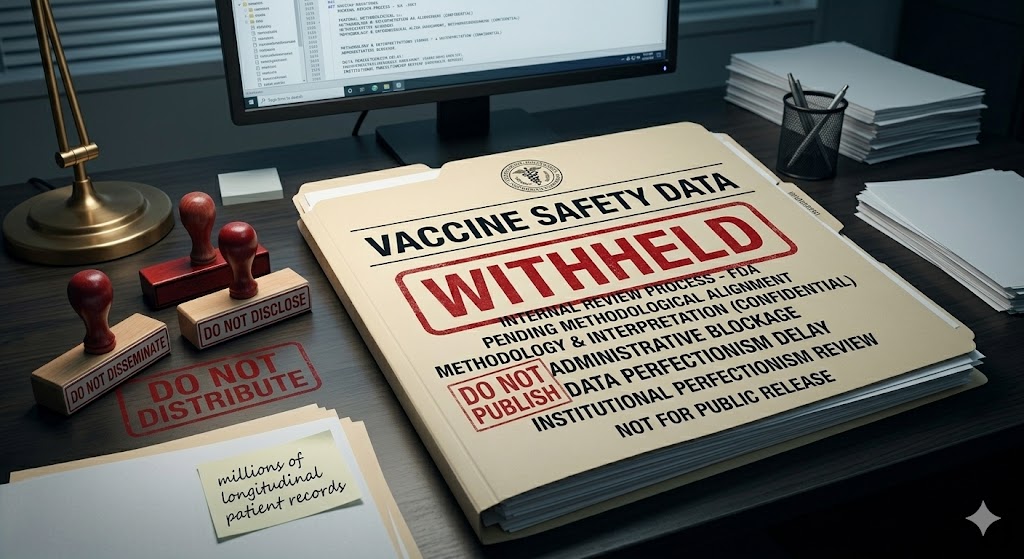
The recent revelation that the Food and Drug Administration (FDA) blocked the publication of comprehensive research affirming the safety of COVID-19 and shingles vaccines has ignited a complex debate regarding institutional transparency. These studies, which analyzed millions of patient records through sophisticated data-monitoring systems, were intended to provide real-world evidence to bolster public confidence. However, the decision to pull these findings before they reached the public domain suggests a significant internal friction between scientific staff and agency leadership. This suppression of favorable data presents a paradoxical challenge: while regulatory bodies usually face scrutiny for withholding negative results, the withholding of positive safety data can be equally damaging to the integrity of public health communication.
The research in question was not a minor undertaking but rather a large-scale analysis utilizing data from various national contractors and healthcare databases. By reviewing millions of longitudinal patient records, scientists sought to identify any statistically significant links between the vaccines and adverse health events. The primary cause of the data collection was the urgent need for post-market surveillance during a period of heightened vaccine hesitancy. The findings reportedly showed no new safety signals, confirming that the vaccines performed as expected within the general population. Despite these reassuring conclusions, the publication process was halted, creating a vacuum of information that could have otherwise served to debunk circulating misinformation.
The cause of this administrative blockage appears to be rooted in methodological disagreements and a rigid internal review process. Reports indicate that agency officials were concerned with the nuances of how the data was interpreted or the specific statistical models employed by the contractors. This bureaucratic caution often stems from a fear that any subsequent correction or nuance added post-publication could be weaponized by critics to undermine the agency’s authority. Consequently, the effect of this perfectionist approach was the total removal of the research from the public eye, preventing the scientific community from vetting the data through the standard peer-review process.
This situation highlights a growing tension between the FDA’s role as a public health communicator and its role as a scientific gatekeeper. When the agency suppresses findings that support the safety profile of vaccines, it inadvertently fuels the narrative that data is being manipulated or curated for specific agendas. The immediate effect of this decision-making process is a degradation of trust among healthcare providers who rely on the most current federal data to counsel their patients. Without the backing of these comprehensive studies, clinicians are left with a smaller pool of evidence to address the concerns of a skeptical public, thereby weakening the overall impact of immunization campaigns.
Furthermore, the involvement of external data contractors complicates the institutional dynamics of such research. These contractors are often tasked with high-speed data processing to meet the demands of real-time safety monitoring. When the FDA rejects their output due to internal standards that may not have been clearly articulated at the project’s onset, it creates a bottleneck in the flow of information. The cause of the delay is often a lack of alignment between the technical teams and the policy-making arms of the agency. The resulting effect is a significant waste of resources and a delay in the dissemination of critical public health insights that were funded by taxpayer dollars.
From an analytical perspective, the decision to withhold safe vaccine data is indicative of a broader crisis in regulatory science. The agency operates under the heavy burden of ensuring absolute accuracy, but in the digital age, the delay of information is often interpreted as an act of obfuscation. This institutional reflex to “perfect” the data before release causes a lag that can last months or even years. During this period, the void is filled by unverified sources and anecdotal evidence. The cause-and-effect relationship here is clear: the more the agency strives for internal consensus before speaking, the less relevant its voice becomes in the rapid-fire cycle of public discourse.
The specific inclusion of shingles vaccine data alongside COVID-19 findings suggests that these procedural hurdles are not unique to the pandemic response but are systemic within the agency’s research infrastructure. Shingrix, the leading shingles vaccine, has been on the market for several years with a well-established safety profile. If the FDA is hesitant to release updated, large-scale safety confirmations for established products, it suggests a deeply ingrained culture of risk aversion. This culture prioritizes the avoidance of administrative error over the public’s right to access comprehensive safety data, which is essential for informed consent and healthcare autonomy.
The long-term implications of these suppressed studies could lead to a fundamental shift in how real-world evidence is utilized by federal agencies. If internal disputes can effectively “kill” a study that shows positive results, the scientific community may begin to question the objectivity of the agency’s publication pipeline. This creates a ripple effect where independent researchers may feel less inclined to collaborate with the FDA, fearing that their work will be shelved if it does not meet a shifting set of internal criteria. The ultimate effect is a chilling of the collaborative spirit necessary for robust post-market surveillance and pharmaceutical safety monitoring.
Institutional transparency is often the only antidote to public skepticism, particularly in the realm of immunology. By failing to publish findings that prove vaccine safety, the FDA has missed an opportunity to build a bridge with the public. The cause of the skepticism is often a perceived lack of honesty; therefore, the effect of withholding even “good” news is the reinforcement of that very skepticism. In the future, the agency will likely face increased pressure from legislative bodies and advocacy groups to standardize the release of all safety data, regardless of internal disagreements over the finer points of statistical methodology.
In conclusion, the decision to block the publication of research affirming vaccine safety reveals a systemic conflict between the rigors of scientific review and the necessity of public transparency. The cause of the suppression—methodological caution and bureaucratic friction—led to an effect that undermines the very goals the FDA is tasked with achieving. To restore public confidence, the agency must move toward a more open model of data sharing, where disagreements are aired in the context of peer review rather than managed through the withdrawal of critical findings. Only through such a transformation can the FDA fulfill its mandate as a transparent and reliable guardian of public health in an era of unprecedented information scrutiny.