
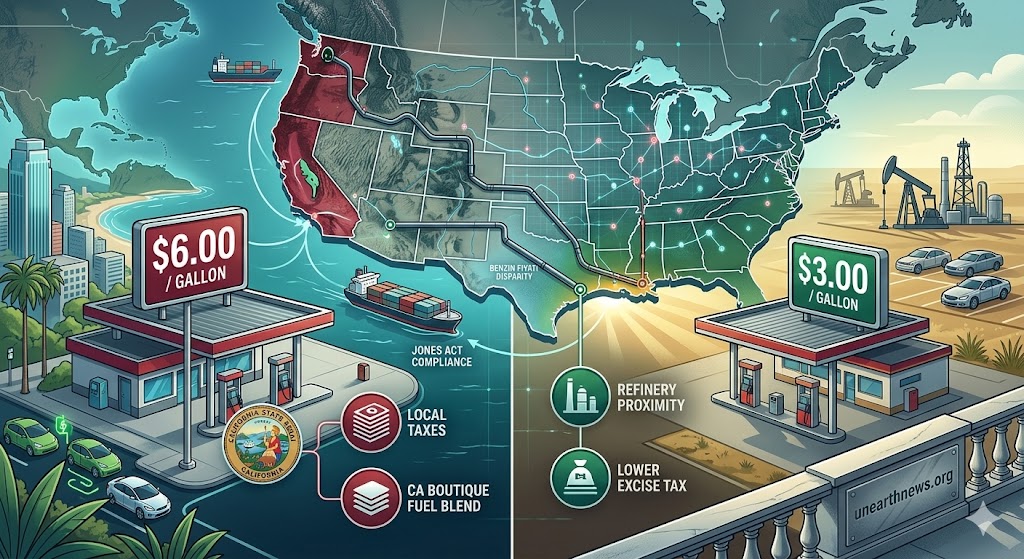
The disparity in gasoline prices across the United States is rarely the result of a single economic factor, but rather a confluence of localized variables that create a fragmented domestic market. While global crude oil prices set the baseline, the final figure at the pump reflects a complex ecosystem of logistics, legislation, and regional market dynamics. Consumers in states like California or Washington often pay significantly more than those in the Gulf Coast region, a reality driven by structural differences in how fuel is refined, transported, and taxed across state lines.
State-level taxation represents the most immediate and visible contributor to price variance. Each state legislature determines its own excise tax on motor fuels, which can range from under twenty cents to over seventy cents per gallon. Furthermore, some states apply additional sales taxes or environmental fees, such as carbon pricing mechanisms. These cumulative levies are often earmarked for infrastructure maintenance or climate initiatives, creating a permanent price floor that varies by dozens of cents between neighboring jurisdictions.
Environmental regulations significantly complicate the supply chain by requiring specialized boutique fuel blends. To comply with the Clean Air Act and local air quality standards, certain states mandate specific formulations of gasoline designed to reduce smog and emissions. For instance, California’s Air Resources Board requires a unique blend that is not used elsewhere in the country. This limits the ability of retailers to source cheaper fuel from other regions during shortages, as out-of-state supplies often fail to meet these stringent local chemical requirements, resulting in higher production costs.
The geographical proximity to major refining hubs, particularly the Gulf Coast, dictates a large portion of the logistical cost. The United States possesses a vast network of pipelines that transport fuel from Texas and Louisiana to the East Coast and Midwest. However, states situated far from these arteries or the refineries themselves must rely on more expensive transportation methods, including rail, barge, or long-haul trucking. The added expense of moving a gallon of gasoline hundreds of miles over land is inevitably passed down to the consumer, widening the price gap between supply centers and remote markets.
Maritime shipping laws, most notably the Jones Act, play a critical role in the pricing structures of coastal and non-contiguous states. The Jones Act requires that goods shipped between U.S. ports be carried on ships that are built, owned, and operated by United States citizens. Because there is a limited fleet of these vessels, shipping fuel from the Gulf Coast to the Northeast or the West Coast can be more expensive than importing oil from international markets. This regulatory hurdle often forces certain regions to rely on global imports, exposing them to international market volatility that landlocked states might otherwise avoid.
Regional refining capacity and the vulnerability of that infrastructure also cause localized price spikes. In the Midwest or the Rockies, the market is often served by a handful of regional refineries. If one of these facilities undergoes unplanned maintenance or suffers an operational failure, the local supply drops precipitously. Because these regions are often geographically isolated from other supply hubs, the lack of immediate alternatives leads to rapid price inflation until the facility returns to service or supply is rerouted at a high cost, causing a temporary but sharp divergence from national averages.
Market competition at the retail level introduces another layer of pricing complexity based on urban density. In populated areas with a high concentration of competing gas stations, prices may be kept lower due to aggressive competition for volume. Conversely, in rural areas or at locations near major highway interchanges where options are limited, retailers can often command a premium. The presence of large-scale hypermarket retailers also plays a role, as they often use low gas prices as a loss leader to attract foot traffic, forcing nearby traditional stations to lower their margins.
The type of crude oil utilized by regional refineries also impacts the final cost of gasoline. Refineries on the East and West Coasts often process heavier or more complex imported crudes, which can be more expensive than the light, sweet crude produced in the Permian Basin and processed by Gulf Coast refineries. The disparity between the price of West Texas Intermediate and international benchmarks like Brent crude can create a ripple effect, where regions dependent on international supply chains face higher input costs regardless of domestic production levels.
Operational overhead for gas station owners varies wildly based on local economic conditions and real estate values. Factors such as property taxes, utility rates, and the minimum wage in a given state influence the dealer margin added to every gallon. In high-cost states, the expense of simply maintaining a retail location is much higher than in states with lower costs of living. These overhead costs are factored into the pump price, adding several cents to every gallon sold in premium markets compared to more affordable regions.
The biannual transition between summer-grade and winter-grade gasoline creates seasonal price volatility that hits some states harder than others. Summer blends are more expensive to produce because they contain lower-volatility components to prevent evaporation in high temperatures. The transition period in the spring often sees prices rise as refineries draw down winter stocks and perform necessary maintenance. States with stricter environmental windows for this transition often experience more acute price swings during these periods, especially if the switch coincides with local supply shortages.
Looking toward the future, the push for decarbonization and the increasing adoption of electric vehicles are beginning to influence long-term gasoline pricing strategies. As some states implement aggressive mandates to phase out internal combustion engines, the incentive for oil companies to invest in new refining capacity in those regions diminishes. This lack of long-term capital investment can lead to aging infrastructure and tighter supply margins, potentially keeping gasoline prices elevated even as overall demand begins to plateau or decline in the coming decades.
In conclusion, the price at the pump is a localized phenomenon shaped by a delicate balance of infrastructure, policy, and geography. While federal energy policy and global crude markets provide the framework, it is the state-specific taxes, environmental mandates, and logistical constraints that determine the significant price gaps seen across the country. Understanding these variables reveals that gasoline pricing is not a monolithic entity but a reflection of the diverse economic and regulatory landscapes that define the different regions of the United States.