
The Strategic Calculations Behind China’s Elaborate Reception of the Trump Administration
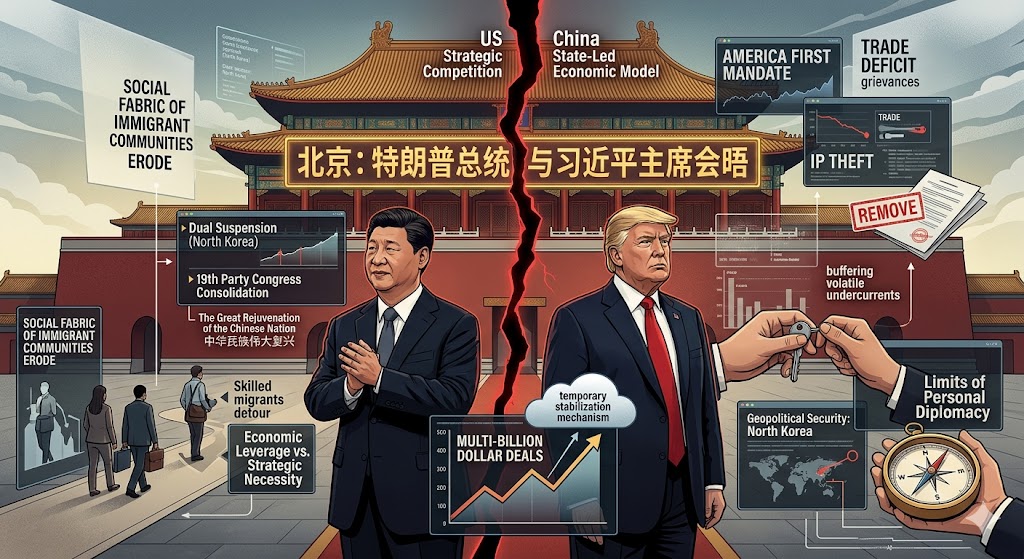
The diplomatic encounter between President Donald Trump and President Xi Jinping in Beijing represented a masterclass in political theater, where the traditional rigidity of Chinese protocol was replaced by a “State Visit Plus” treatment. This deliberate escalation of pageantry, featuring a private tour of the Forbidden City and an opulent state banquet, served a dual purpose in the complex framework of Sino-American relations. By elevating the aesthetic and ceremonial aspects of the visit, Beijing sought to establish a personal rapport with a president known for prioritizing bilateral chemistry and grand gestures, effectively attempting to buffer the increasingly volatile undercurrents of the relationship.
At the heart of this reception was the recognition that the structural foundations of the U.S.-China relationship were undergoing a profound shift. The Trump administration had arrived in Beijing with a mandate to address long-standing grievances regarding the trade deficit and intellectual property theft, framed under the banner of “America First.” Consequently, China utilized the high-level hospitality as a strategic tool to manage these tensions, hoping that the visual demonstration of mutual respect and ancient cultural heritage would incentivize a more conciliatory approach from Washington regarding critical economic sanctions.
The economic dimensions of the visit were highlighted by the signing of multi-billion dollar deals, which were presented with significant fanfare to demonstrate the tangible benefits of cooperation. However, analytical scrutiny reveals that many of these agreements were non-binding memorandums of understanding or extensions of previously existing commercial frameworks. This cause-and-effect dynamic suggests that while the ceremonies provided the political “wins” necessary for both leaders to present back home, they functioned more as a temporary stabilization mechanism rather than a resolution to the fundamental systemic differences between the two largest economies.
Geopolitical security, specifically the escalating nuclear threat from North Korea, formed the secondary pillar of the discussions. The United States leveraged the visit to pressure China into using its unique economic leverage over Pyongyang, arguing that regional stability was a prerequisite for continued trade growth. China, in response, used the platform of the state visit to reiterate its preference for a “dual suspension” approach, balancing the American demand for maximum pressure with its own strategic necessity to avoid a humanitarian or political collapse on its border.
The decision to host President Trump in the Forbidden City, a site historically reserved for emperors, was a calculated psychological move. By situating the American leader within the epicenter of Chinese historical power, Beijing aimed to project a narrative of China as a peer superpower that had “stood up” and was now reclaiming its central place in the world order. This shift in positioning was significant, as it moved away from the more modest diplomatic postures of previous Chinese administrations, reflecting President Xi’s vision of “The Great Rejuvenation of the Chinese Nation.”
Despite the outward appearance of harmony, the lack of a major policy breakthrough regarding structural market access indicated that the fundamental friction points remained unresolved. The “pomp and pageantry” strategy, while effective at managing the immediate temperature of the relationship, failed to address the underlying reality that the two nations were entering an era of strategic competition. The cause of this stalemate was the inherent incompatibility between China’s state-led economic model and the American demand for a market-oriented level playing field.
President Trump’s rhetoric during the visit was notably more tempered than his campaign-trail criticisms, illustrating how high-level diplomatic engagement can temporarily alter public discourse. This shift in tone was a direct result of the meticulous hospitality provided by the Chinese side, which successfully navigated the U.S. President’s preference for personal diplomacy. However, this change in atmosphere did not translate into a change in the internal policy trajectories of the U.S. Trade Representative’s office, which continued to prepare for more aggressive measures against Chinese trade practices.
The timing of the visit, occurring shortly after the 19th National Congress of the Communist Party of China, was critical. Having consolidated his power internally, President Xi used the Trump visit to signal his status as a global statesman. The elaborate ceremonies were as much for the Chinese domestic audience as they were for the international community, proving that under Xi’s leadership, China could command the highest levels of respect from the leader of the Western world without making significant concessions on its core interests.
From an analytical perspective, the visit demonstrated the limits of personal diplomacy in the face of deep-seated national interests. While the “State Visit Plus” treatment successfully avoided an immediate diplomatic breakdown, it underscored the growing reliance on symbolism over substance. This reliance often masks the absence of a long-term strategic consensus, creating a fragile peace that is highly susceptible to future geopolitical shocks and domestic political pressures in both capitals.
The reaction of regional allies in the Indo-Pacific was one of cautious observation, as the spectacle of the Beijing summit raised questions about the future of the U.S. commitment to its traditional security architecture. By engaging so deeply in the pageantry of a bilateral “G2” dynamic, both leaders inadvertently signaled a potential shift toward a world order defined by the interests of two superpowers, often at the expense of multilateral institutions and regional partner autonomy.
In conclusion, the extravagant ceremonies in Beijing served as a sophisticated diplomatic buffer that allowed both nations to pause their escalating hostilities without addressing the root causes of their disagreement. The cause of the pageantry was the need to manage a volatile personal relationship between two idiosyncratic leaders, while the effect was a temporary improvement in optics that lacked the legislative or treaty-based support to create lasting stability. This event proved that while culture and ceremony can facilitate dialogue, they cannot bridge the gap created by divergent economic ideologies and competing visions for global hegemony.
Ultimately, the Trump-Xi summit in Beijing will be remembered as the final moment of high-level decorative diplomacy before the relationship descended into a more overt and prolonged trade war. The pageantry was the high-water mark of a strategy that sought to win over an administration through prestige rather than policy, a tactic that would soon reach its limits as the structural realities of global power dynamics reasserted themselves. The event highlights a critical lesson in modern international relations: that the depth of a ceremony is often inversely proportional to the depth of the consensus achieved behind closed doors.