
As we navigate the mid-point of this decade, the wellness landscape of 2026 has undergone a profound transformation, shifting its focus from high-performance optimization to a state of “Mindful Modernity.” We are no longer chasing the next bio-hack or wearable gadget with the same frantic energy of years past; instead, the sophisticated individual is seeking a return to the foundational elements of a well-lived life. This era is defined by a collective deceleration, where the ultimate luxury is not found in speed or connectivity, but in the deliberate curation of one’s time, environment, and internal peace.
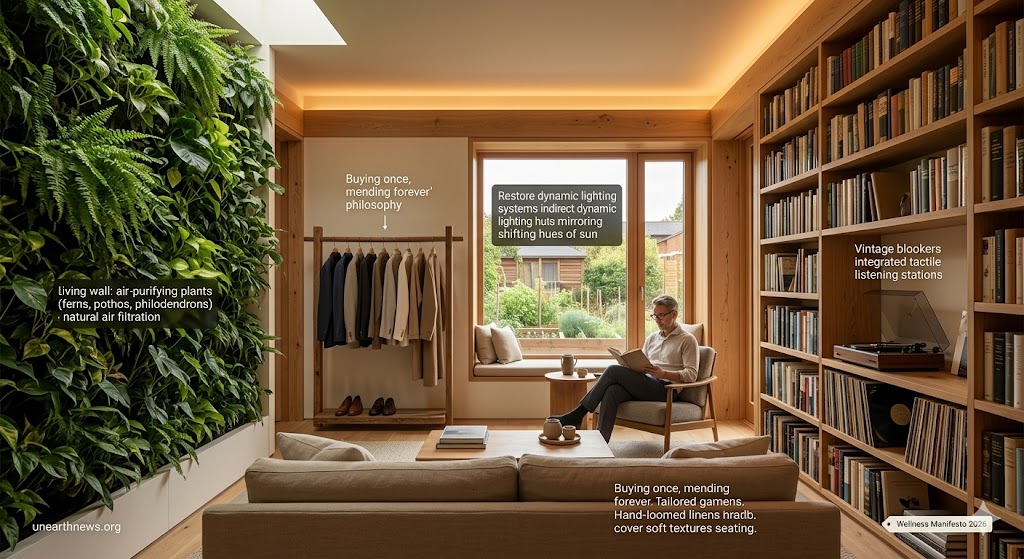
The concept of the “Digital Sabbatical” has matured from a sporadic weekend detox into a cornerstone of a refined lifestyle. In 2026, high-status living is increasingly signaled by one’s ability to remain unavailable. We see a rise in the “Analog Sanctuary”—dedicated spaces within the home where technology is physically prohibited, replaced by floor-to-ceiling libraries and tactile listening stations. By reclaiming our attention from the algorithmic grip, we allow the mind to return to its natural state of wandering, fostering a level of creativity and deep thought that was nearly lost in the hyper-connected era.
Architectural wellness has evolved to prioritize circadian harmony, where our living spaces are designed to breathe in sync with the natural world. Modern homes are now being retrofitted with dynamic lighting systems that mirror the shifting hues of the sun, alongside “living walls” that act as natural air filtration systems. This integration of biophilic design ensures that our indoor environments support our biological clocks rather than disrupting them. To live well in 2026 is to inhabit a space that actively restores your nervous system through soft textures, natural wood, and an abundance of indirect, amber-toned light.
The art of “Slow Travel” has officially superseded the checklist-driven tourism of the previous decade. The discerning traveler now prioritizes “destination integration,” spending weeks or even months in a single locale to absorb its rhythm, language, and customs. This trend emphasizes the quality of the experience over the quantity of the itinerary. Whether it is a remote villa in the Cotswolds or a quiet coastal town in the Mediterranean, the goal is to leave a place feeling as though you have contributed to its ecosystem rather than merely consuming its sights.
Sensory enrichment has become a primary tool for emotional regulation, with a renewed focus on “Olfactory Landscaping.” We are seeing a move toward bespoke home scents that are scientifically formulated to trigger specific neural pathways for relaxation or focus. Beyond simple candles, this involves a sophisticated understanding of how scent, sound, and touch work in tandem to create a holistic atmosphere. Soft, weighted textiles and high-fidelity ambient soundscapes are no longer optional extras but are considered essential components of a mentally healthy home environment.
Sustainable minimalism in 2026 is less about having nothing and more about having exactly what matters. The “Buy Once, Mend Forever” philosophy has taken root, leading to a resurgence in luxury craftsmanship and artisanal goods. This shift reflects a deeper respect for the lifecycle of our possessions. Our wardrobes and homes are now populated by items with stories—hand-loomed linens, reclaimed timber furniture, and tailored garments made from regenerative fibers. This intentionality reduces the cognitive load of decision-making and brings a sense of quiet permanence to our daily lives.
The renaissance of analog hobbies has provided a necessary counterbalance to our digital professional lives. Activities such as pottery, slow-cookery, and traditional gardening have become high-value social currencies. These pursuits demand a level of patience and physical presence that digital interactions cannot replicate. Engaging in a tactile hobby allows for a state of “flow” that is inherently meditative, proving that the most effective way to manage stress is often to work with one’s hands in a way that produces something tangible and beautiful.
Nutrition in this era has moved beyond the restrictive labels of the past and into a space of “Soil-to-Soul” eating. There is a burgeoning obsession with nutrient density and regenerative agriculture, where the health of the soil is seen as inextricably linked to human longevity. Communal dining has also seen a revival, with a focus on long, lingering meals that prioritize conversation over convenience. By treating food as both medicine and a medium for social connection, we transform a basic biological necessity into a daily ritual of gratitude and community.
Cognitive vitality is the new frontier of holistic wellness, with a focus on “Neuro-Plasticity Play.” This involves engaging in activities that challenge the brain in novel ways, such as learning a new instrument or practicing a complex physical skill like archery or ballroom dance. In 2026, we understand that mental health is not just the absence of illness, but the presence of mental agility and resilience. Refined living now includes a commitment to lifelong learning, ensuring that the mind remains as vibrant and adaptable as the body.
The social fabric of wellness has shifted away from global digital networks and back toward the “Micro-Community.” We are seeing the rise of localized wellness hubs—private members’ clubs that prioritize face-to-face interaction, shared gardens, and collective meditation. These physical spaces provide a sense of belonging that social media promised but ultimately failed to deliver. In these sanctuaries, the focus is on “Social Wellness,” recognizing that deep, authentic human connection is perhaps the most significant predictor of long-term health and happiness.
Fitness has undergone a restorative revolution, moving away from high-intensity interval training toward “Bio-harmonic Movement.” This approach favors longevity-focused practices such as mobility work, functional strength, and outdoor “forest bathing.” The goal is to move in a way that honors the body’s current state rather than pushing it to a point of exhaustion. In 2026, a truly fit individual is one who possesses the flexibility to move through the world with grace and the stamina to enjoy the natural beauty of their surroundings without physical strain.
Ultimately, the wellness trends of 2026 invite us to redefine success not by what we accumulate, but by the quality of our presence. To live with “Mindful Modernity” is to acknowledge that while we inhabit a fast-paced world, our internal tempo remains our own to set. By embracing the principles of slow living, we find that life becomes richer, more textured, and infinitely more meaningful. This is the new standard of luxury: a life lived with deep intention, where every moment is an opportunity to practice the art of being truly and vibrantly alive.