
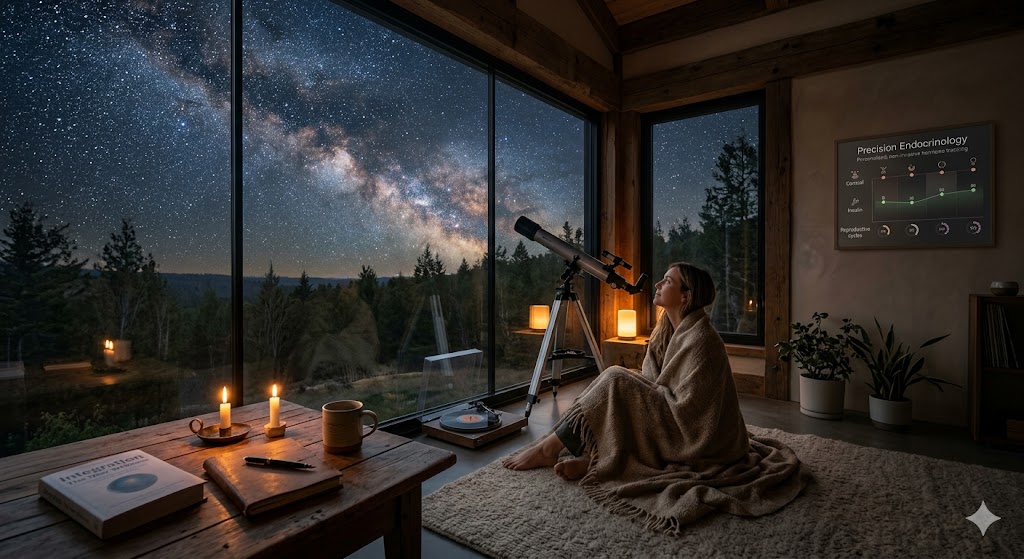
As we navigate the opening chapters of 2026, the global wellness landscape has undergone a profound shift, moving away from the frantic pursuit of “bio-hacking” toward a more grounded philosophy of “integration.” This year, the focus is no longer on how much we can optimize our output, but on how deeply we can reconnect with the natural world and our internal rhythms. The collective consciousness has matured, favoring a refined approach to longevity that prizes stillness over speed and intuition over algorithms. In this new era of mindful modernity, wellness is viewed not as a series of isolated tasks, but as a seamless tapestry woven into the fabric of daily life.
Central to this evolution is the rising movement of night-sky connectedness, an acknowledgment that our well-being is inextricably linked to the celestial cycles we long ignored in favor of artificial luminescence. As urban sprawl continues to intensify, the preservation of “dark sky” sanctuaries has become a luxury priority. For the modern individual, this translates into a dedicated practice of nocturnal mindfulness—engaging in stargazing not merely as a hobby, but as a way to recalibrate the circadian rhythm and find cosmic perspective. By honoring the darkness, we allow our nervous systems to enter a state of profound repair that blue-lit environments simply cannot offer.
To practically embrace this trend, one must look toward the intentional design of the home environment. The 2026 lifestyle prioritizes “circadian lighting” systems that mimic the shifting hues of the sun and moon, yet the most sophisticated practitioners go a step further by implementing a total digital blackout after twilight. This return to analog evenings—characterized by candlelight, tactile literature, and deep conversation—serves as a primary defense against the cognitive fragmentation of the digital age. It is a commitment to the beauty of the unseen, allowing the mind to wander through the vastness of the universe before settling into restorative sleep.
Parallel to our outward gaze at the stars is a refined inward focus on hormone health, which has emerged as the cornerstone of 2026 vitality. No longer relegated to niche medical discussions, hormonal balance is now understood as the silent architect of our mood, metabolic health, and cognitive clarity. The current trend moves beyond generic supplements toward “precision endocrinology,” where individuals utilize non-invasive, real-time monitoring to understand how their lifestyle choices affect cortisol, insulin, and reproductive hormones. This is wellness at its most personalized, empowering people to move in sync with their biological fluctuations rather than fighting against them.
For women and men alike, this focus on hormone health fosters a deeper appreciation for life’s different seasons. We are seeing a move toward “cycle syncing” in professional and athletic spheres, where workloads and exercise intensities are adjusted to align with hormonal ebbs and flows. This practice reduces the risk of burnout and chronic inflammation, replacing the outdated “hustle culture” with a sustainable model of high performance. By treating our hormones with the same reverence we once reserved for cardiovascular fitness, we unlock a more resilient and emotionally stable version of ourselves.
The concept of the “digital detox” has also matured into a more nuanced state of “digital minimalism” in 2026. We have reached a saturation point where the novelty of constant connectivity has faded, replaced by a yearning for the tactile and the ephemeral. This year, the most sought-after lifestyle is one that champions analog hobbies—think vinyl records, fountain pens, and slow-fire ceramics. These activities act as anchors, pulling us back from the vacuum of the metaverse into the physical world, where the weight of an object and the texture of a surface provide a sensory grounding that digital interfaces can never replicate.
In the realm of sustainable minimalism, the 2026 aesthetic has moved away from stark, sterile environments toward “warm organicism.” This philosophy dictates that every object in one’s home must serve a dual purpose of utility and soulfulness. We are seeing a rejection of the disposable in favor of heirloom-quality pieces crafted from regenerative materials. This approach to interior design doesn’t just reduce our environmental footprint; it creates a sanctuary that supports mental health. When our surroundings are intentional and uncluttered, our internal landscape follows suit, allowing for a level of creative clarity that is impossible in a space defined by excess.
Longevity in 2026 is being redefined through the lens of ancestral wisdom blended with cutting-edge science. We are seeing a resurgence of traditional apothecary practices, where the use of adaptogenic herbs and seasonal tonics is supported by genomic testing. This “high-tech, high-touch” approach ensures that we are not just adding years to our lives, but life to our years. The focus is on the “healthspan”—the period of life spent in good health—rather than just chronological age. It involves a return to functional movement, such as walking on uneven terrain and natural climbing, which maintains joint integrity and cognitive agility far better than repetitive gym machines.
The professional sphere is also adapting to the “Slow Living” ethos, with the rise of “Deep Work” retreats and the normalization of the four-day workweek. In 2026, the mark of true success is not a packed calendar, but the luxury of time. Professionals are increasingly prioritizing “white space” in their schedules—unstructured time meant for reflection, wandering, and spontaneous thought. This shift acknowledges that the most innovative ideas do not come from a place of stress, but from a mind that has been given the permission to rest. Efficiency is no longer about doing more; it is about doing what matters with absolute presence.
Sensory regulation has become a vital tool for navigating the modern world’s complexities. This year, we are seeing an emphasis on “biophilic sensory experiences,” such as forest bathing and thermal therapy, as essential components of a wellness routine. Whether it is the shock of a cold plunge or the enveloping warmth of a traditional sauna, these temperature-based practices help to tone the vagus nerve and improve emotional regulation. By intentionally stressing the body in controlled environments, we build a robust physiological foundation that can better handle the unpredictability of daily life.
Community and the “Third Space” have seen a significant revival, as we recognize that isolation is a significant barrier to holistic health. In 2026, wellness is a collective endeavor. We are seeing the growth of “wellness social clubs” that replace traditional bars and lounges with spaces dedicated to tea ceremonies, communal meditation, and philosophical discourse. These environments provide a sense of belonging and shared purpose, reminding us that our health is influenced by the quality of our relationships as much as by our diet or exercise. To live well in 2026 is to be part of a conscious, supportive network.
Ultimately, the wellness trends of 2026 invite us to reclaim our autonomy in an increasingly automated world. By looking to the night sky for perspective, listening to our hormones for guidance, and stripping away the digital noise, we create space for a more refined and purposeful existence. This year is an invitation to slow down, to breathe deeper, and to recognize that the ultimate luxury is not found in what we possess, but in how we experience the present moment. As we embrace these shifts, we find that a life well-lived is not one of constant optimization, but one of elegant, mindful harmony with the world around us.