
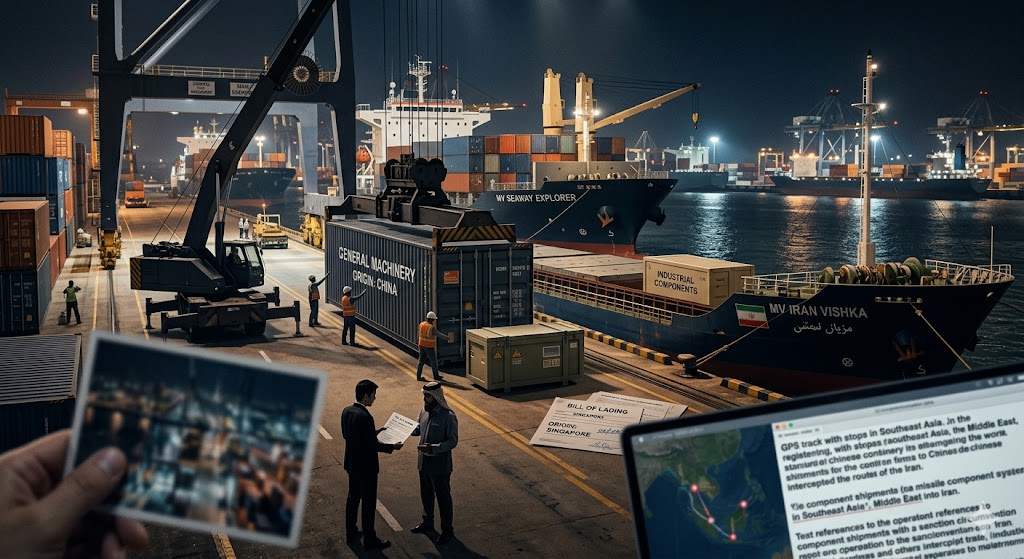
Recent reports from U.S. intelligence officials have highlighted a growing and sophisticated effort by Chinese defense firms to facilitate secret arms sales to Iran, marking a significant shift in the clandestine military landscape. This operation is characterized by a high degree of coordination intended to circumvent international sanctions and minimize the risk of diplomatic exposure for Beijing. By utilizing a network of intermediaries and complex shipping routes, these entities aim to provide Tehran with advanced military capabilities while maintaining a veneer of plausible deniability. The revelation underscores the deepening strategic alignment between the two nations, which poses new challenges for global security and the enforcement of non-proliferation agreements.
The primary mechanism of this clandestine trade involves the use of third-country transit points to mask the true origin of the military hardware. Instead of direct shipments from Chinese ports to Iranian terminals, the goods are often routed through secondary hubs in Southeast Asia, the Middle East, or even parts of Eastern Europe. At these intermediate locations, shipments are frequently repackaged, documentation is falsified, and the cargo is transferred to different vessels. This transshipment strategy is designed to create a fragmented paper trail that makes it exceedingly difficult for international monitors and intelligence agencies to trace the hardware back to its original Chinese manufacturers.
From a strategic perspective, China’s willingness to engage in these covert transactions is driven by a desire to consolidate its influence in the Middle East and secure its long-term energy interests. Iran remains a critical partner for Beijing, providing a reliable source of oil and serving as a regional counterweight to Western influence. By bolstering Iran’s military modernization, China not only strengthens a key ally but also creates a more complex security environment for the United States and its regional partners. This cause-and-effect relationship suggests that Beijing views the tactical risks of sanctions as secondary to the broader geopolitical advantages of a well-armed Iranian state.
On the Iranian side, the motivation for seeking Chinese military technology is rooted in the necessity of upgrading its aging defense infrastructure under the pressure of intense international sanctions. Despite domestic advancements in drone and missile technology, Iran still relies heavily on foreign expertise for critical components, such as advanced sensors, microelectronics, and propulsion systems. The acquisition of Chinese technology through secret channels allows Tehran to enhance the precision and lethality of its indigenous platforms, thereby increasing its deterrence capabilities and its ability to project power across the Persian Gulf and beyond.
The technical focus of these sales appears to prioritize dual-use technologies and specific components that are vital for modern asymmetric warfare. This includes sophisticated guidance systems for ballistic missiles, high-grade carbon fiber for aerospace applications, and electronic components for unmanned aerial vehicles. By focusing on components rather than fully assembled weapon systems, the involved firms can more easily bypass traditional arms control inspections. This granular approach to military assistance provides Iran with the building blocks necessary to sustain its regional proxy networks and maintain its strategic edge in ongoing conflicts.
The response from U.S. intelligence has been one of heightened surveillance and the implementation of more rigorous financial tracking mechanisms. Officials have reportedly utilized a combination of satellite imagery, intercepted communications, and human intelligence to map out the network of front companies and logistics providers involved in the scheme. The discovery of these activities has led to a re-evaluation of current monitoring protocols, as the decentralized nature of the sales makes traditional interdiction efforts less effective. This ongoing intelligence battle highlights the evolving nature of global security, where economic networks are increasingly used as tools of statecraft and military expansion.
One of the most significant consequences of these secret sales is the potential erosion of the global sanctions regime. When major powers like China allow their firms to bypass international restrictions, it creates a leakage effect that undermines the collective efforts of the international community to curb Iranian military growth. This encourages other nations and private entities to explore similar avenues for profit, leading to a gradual breakdown in the norms surrounding arms control. The long-term effect is a less predictable international system where sanctions are viewed more as hurdles to be navigated than as genuine barriers to prohibited trade.
The influx of advanced components has a direct and measurable impact on the volatility of the Middle East. As Iran incorporates Chinese technology into its drone and missile programs, the capabilities of its regional proxies, such as the Houthi movement and Hezbollah, are similarly enhanced. This creates a dangerous escalation cycle where regional rivals feel compelled to increase their own military spending and seek more advanced defensive systems from the West. The cause-and-effect relationship here is clear: covert arms transfers lead to technological proliferation, which in turn drives regional instability and increases the risk of direct military confrontation.
Diplomatic relations between Washington and Beijing are likely to face further strain as a result of these revelations. The U.S. government has repeatedly warned China against providing material support to sanctioned regimes, and the discovery of these secret arms plots provides fresh ammunition for those advocating for a more hawkish stance toward Beijing. This issue is expected to become a central point of contention in bilateral security dialogues, potentially leading to additional trade restrictions and the blacklisting of more Chinese defense entities. The incident serves as a reminder that the competition between the two superpowers is not just economic but also extends to the fundamental security architecture of the globe.
Beyond the immediate diplomatic fallout, there are significant legal and corporate risks for the Chinese firms involved. The U.S. Treasury Department has the authority to impose secondary sanctions, which can cut off these firms from the U.S. financial system and prohibit them from doing business with any entity that utilizes U.S. dollars. For large Chinese conglomerates with global operations, the financial loss associated with such sanctions could far outweigh the profits generated from secret arms sales. However, the use of small, specialized shell companies often mitigates this risk, as these entities have no exposure to Western markets and can be easily liquidated and replaced.
Looking toward the future, the international community can expect to see an increase in the complexity of clandestine procurement networks. As detection technologies improve, the methods used to hide arms shipments will likely become even more decentralized and digitized. The use of cryptocurrencies for payments and the exploitation of free trade zones for transshipment are emerging trends that will further complicate the task of enforcement. This suggests that the future of arms control will rely less on physical border checks and more on deep-data analysis and international cooperation in financial oversight.
Ultimately, the reports of Chinese firms plotting secret arms sales to Iran signify a broader shift toward a fragmented global order where traditional alliances and international laws are increasingly contested. The convergence of Chinese economic power and Iranian regional ambitions creates a potent challenge to the established security framework. As the U.S. and its allies work to counter these covert operations, the outcome will likely define the effectiveness of international law in the 21st century. The persistence of these shadow networks serves as a stark illustration of the new realities of geopolitical competition, where the boundaries between trade, technology, and warfare are permanently blurred.