
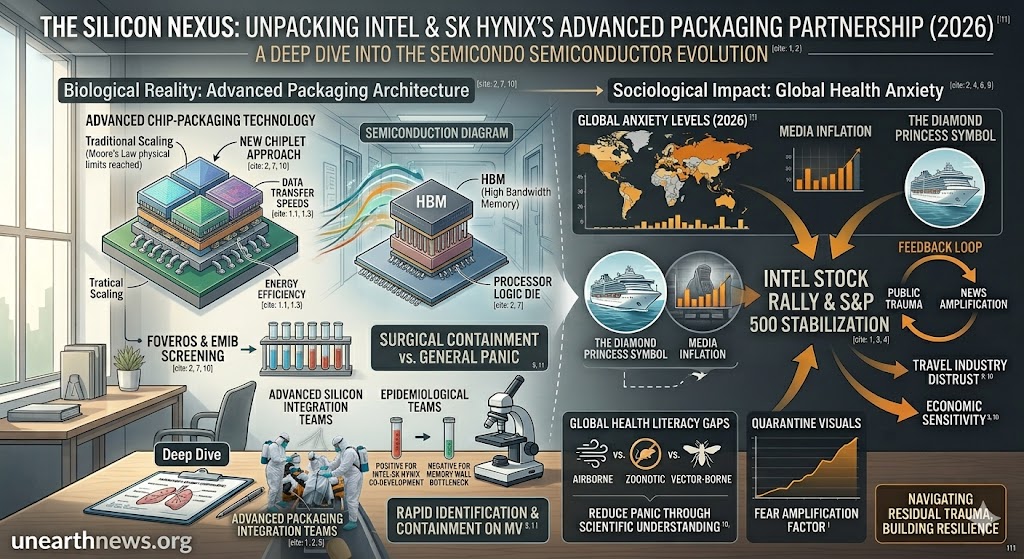
Intel Corporation is currently witnessing a significant shift in investor sentiment, as its stock continues to extend a notable “hot streak” that marks a departure from its previously stagnant market performance. This resurgence is largely driven by a newfound optimism regarding the company’s strategic pivots and its aggressive pursuit of leadership in the semiconductor manufacturing space. The latest catalyst for this upward momentum is a reported collaborative effort between Intel and South Korea’s SK Hynix. According to industry insiders, the two tech giants are exploring a partnership focused on advanced chip-packaging technology, a move that could fundamentally alter the competitive landscape of the global semiconductor industry. This collaboration signifies Intel’s commitment to reclaiming its dominance by leveraging external expertise to bolster its domestic manufacturing capabilities and technological throughput.
The significance of the partnership with SK Hynix cannot be overstated, as chip-packaging has evolved from a secondary stage of production into a critical frontier for innovation. In the modern era of computing, the traditional method of scaling performance—simply shrinking the size of transistors—is reaching its physical limits, a phenomenon often discussed in the context of the slowing of Moore’s Law. Advanced packaging allows engineers to stack different types of chips, such as processors and memory, vertically or side-by-side in a single package. This “chiplet” approach drastically improves data transfer speeds and energy efficiency. By aligning with SK Hynix, a world leader in High Bandwidth Memory (HBM), Intel is positioning itself to integrate cutting-edge memory solutions directly into its silicon architectures, which is a prerequisite for the next generation of high-performance computing and artificial intelligence applications.
From a broader economic perspective, Intel’s stock performance serves as a vital barometer for the health of the technology sector within the S&P 500. As one of the largest constituents of the index, Intel’s recovery provides a stabilizing force for the broader market, particularly at a time when investors are hyper-sensitive to the volatility of tech earnings. The “hot streak” suggests that the market is beginning to price in the success of Intel’s IDM 2.0 strategy, which aims to transform the company into a major foundry player that manufactures chips for other designers. If Intel can successfully demonstrate that its packaging technology is on par with or superior to that of the Taiwan Semiconductor Manufacturing Company (TSMC), it could capture a larger share of the global foundry market, thereby diversifying the earnings profile of the S&P 500’s tech components.
The macroeconomic environment, characterized by fluctuating interest rates and persistent inflationary concerns, adds a layer of complexity to Intel’s capital-intensive expansion. High interest rates typically increase the cost of borrowing, which can be a deterrent for companies engaged in the multi-billion-dollar construction of semiconductor fabrication plants, or “fabs.” However, Intel’s strategic alliances and its eligibility for significant government subsidies under the CHIPS and Science Act provide a buffer against these financial pressures. Investors appear to be looking past short-term interest rate risks, focusing instead on the long-term structural value of domesticating the semiconductor supply chain. This shift in focus reflects a belief that Intel’s capital expenditures today will yield high-margin returns as the world becomes increasingly reliant on advanced silicon.
Inflationary trends also play a role in the strategic necessity of the Intel-SK Hynix collaboration. Semiconductor chips are foundational components in a vast array of consumer and industrial goods; therefore, inefficiencies in the chip supply chain can have a direct, upward pressure on the Consumer Price Index (CPI). By advancing packaging technology, Intel and SK Hynix aim to reduce the overall cost of high-performance computing by increasing yield rates and reducing power consumption. In the long run, these technological efficiencies can contribute to a more disinflationary environment for electronics, offsetting some of the rising labor and raw material costs that have plagued the manufacturing sector over the last fiscal biennium.
Geopolitical considerations are equally paramount in analyzing the implications of this partnership. The global semiconductor industry has long been concentrated in East Asia, creating a single point of failure that poses a risk to global economic stability. A closer tie between a premier American manufacturer like Intel and a South Korean leader like SK Hynix represents a “friend-shoring” of critical technology. This alignment minimizes the risks associated with regional tensions and ensures that the United States and its allies maintain a competitive edge in the development of AI hardware. For investors, this reduces the “geopolitical risk premium” often attached to semiconductor stocks, making Intel a more attractive long-term hold in a diversified portfolio.
The technical marriage of Intel’s “Foveros” 3D packaging technology with SK Hynix’s HBM technology is expected to address the specific bottlenecks currently hindering the AI revolution. Artificial intelligence models require massive amounts of data to be moved between the processor and memory at lightning speeds. Current packaging limitations often create “memory walls” where the processor sits idle waiting for data. By co-developing new packaging standards, Intel and SK Hynix can create a more seamless pipeline for data, effectively unlocking the true potential of AI accelerators. This prospect of becoming a primary hardware provider for the AI boom is a primary driver behind the stock’s recent valuation expansion.
Analyzing Intel’s price-to-earnings (P/E) ratio in light of these developments reveals a market that is transitioning from a value-based assessment to a growth-oriented one. Historically, Intel traded at a discount compared to its rivals like NVIDIA or AMD due to perceived laggardness in manufacturing nodes. However, the recent “hot streak” indicates that the discount is narrowing as the “moat” around its business deepens through these high-tech partnerships. Analysts are now looking at forward-looking metrics, such as the potential revenue from Intel Foundry Services (IFS), which could eventually rival the company’s traditional product revenue. The partnership with SK Hynix acts as a validation of Intel’s technical roadmap, encouraging institutional investors to increase their weightings.
The ripple effects of this optimism extend to the broader semiconductor equipment and materials sector. Companies that provide the specialized machinery for advanced packaging, such as lithography and bonding tools, are also seeing a sympathetic rise in their stock prices. This creates a virtuous cycle within the equity markets, where Intel’s success bolsters the entire ecosystem of its suppliers and partners. As the S&P 500 continues to grapple with the impacts of a “higher-for-longer” interest rate environment, the semiconductor sector’s ability to drive growth through pure innovation remains one of the few reliable engines of upward market movement.
Furthermore, the collaboration highlights the shifting dynamics of corporate research and development. In the past, Intel was known for its “not invented here” syndrome, preferring to develop all technologies in-house. The willingness to work with SK Hynix signals a more pragmatic and open approach under current leadership. This cultural shift is a “soft” economic indicator that often precedes “hard” financial success. By embracing a collaborative model, Intel can accelerate its time-to-market for new products, a critical factor in an industry where being six months behind a competitor can result in billions of dollars in lost revenue.
Looking ahead, the sustainability of Intel’s stock rally will depend on the execution of these reported plans. While the “optimism” is a powerful short-term driver, the market will eventually demand concrete data regarding the performance of the co-developed packaging solutions. If Intel can successfully integrate SK Hynix’s memory into its next generation of server chips, it could potentially win back market share in the lucrative data center segment. This would provide a significant boost to its free cash flow, allowing for further reinvestment and potentially the resumption of more aggressive dividend growth or share buybacks, both of which would be viewed favorably by the investing public.
In conclusion, the extension of Intel’s hot streak is a multifaceted economic event that reflects broader trends in technological convergence, supply chain restructuring, and market sentiment. By leveraging the strengths of SK Hynix in a critical area like chip-packaging, Intel is not just chasing a trend but is attempting to redefine the foundational architecture of the digital economy. As this partnership progresses, it will continue to influence key economic indicators, from the valuation of the S&P 500 to the long-term trajectory of global inflation. For the senior economic observer, Intel’s current trajectory represents a high-stakes bet on the future of innovation and a significant chapter in the ongoing evolution of the global technology sector.