
The Economic and Political Implications of the Proposed Federal Gas Tax Suspension
The intersection of energy policy and domestic economic pressure has become a focal point of national discourse as gasoline prices continue to fluctuate in response to global instability. Former President Donald Trump has recently advocated for a complete suspension of the federal gas tax, suggesting that the levy should be removed until retail prices return to pre-crisis levels. This proposal targets the 18.4 cents per gallon tax on gasoline and the 24.4 cents per gallon tax on diesel, aiming to provide immediate financial relief to American households grappling with high inflation. However, the proposal introduces a complex set of legislative, economic, and infrastructural challenges that require a deep-dive analysis into its potential efficacy and long-term consequences.
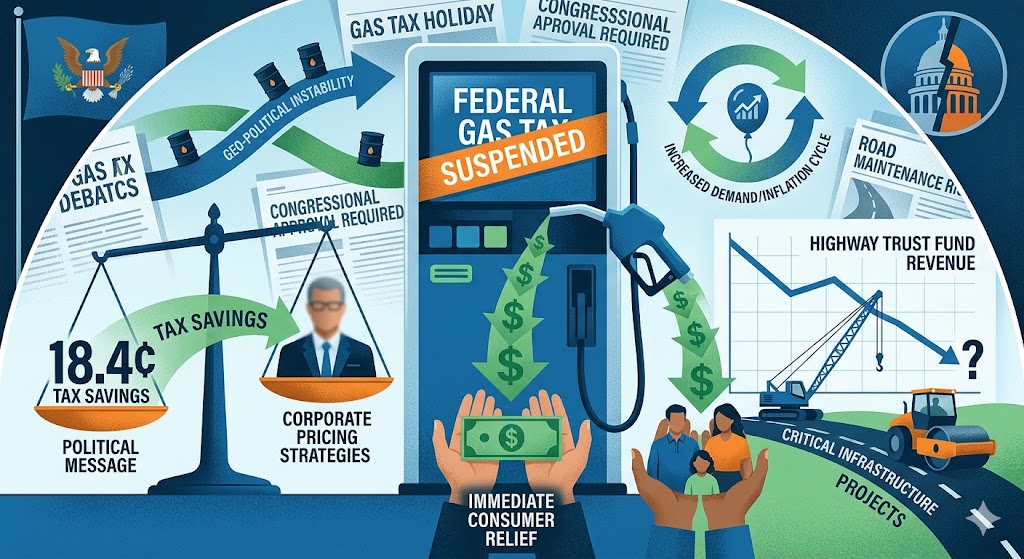
At its core, the federal gas tax serves as a primary revenue stream for the Highway Trust Fund, which finances the construction and maintenance of the nation’s roads, bridges, and public transit systems. By proposing a suspension of this tax, the former president is essentially suggesting a temporary diversion of funds away from critical infrastructure projects. While the immediate goal is to lower the “price at the pump,” the causal link between tax removal and consumer savings is not always direct. Historically, tax holidays do not always translate into lower retail prices, as market volatility and corporate pricing strategies can absorb the difference before it reaches the consumer.
A significant hurdle to this proposal is the constitutional requirement for Congressional approval. The executive branch does not possess the unilateral authority to alter federal tax rates; therefore, any move to suspend the gas tax would require a legislative act. In a polarized political environment, achieving a consensus on such a measure is difficult. Lawmakers are often hesitant to suspend the tax due to the risk of creating a massive deficit in the Highway Trust Fund, which would eventually require an alternative funding source or a significant reduction in federal infrastructure spending, potentially leading to a degradation of transportation safety over time.
Furthermore, the scale of the proposed relief must be measured against the magnitude of recent price increases. Since the onset of the conflict in Ukraine, global oil markets have seen unprecedented shifts, driving domestic gasoline prices up by several dollars in many regions. Critics of the tax suspension argue that removing a mere 18.4 cents per gallon would do little to offset a price surge of two dollars or more. From an analytical perspective, the tax cut functions more as a symbolic gesture of political alignment with the working class rather than a comprehensive solution to the underlying supply-and-demand imbalances that dictate global fuel costs.
The geopolitical dimension of this issue cannot be overstated. The current high cost of fuel is fundamentally tied to the disruption of global supply chains and the sanctions imposed on major energy producers. Because the United States operates within a globalized energy market, domestic tax policy has a limited ability to counteract international price fluctuations. As long as the war remains a primary driver of market uncertainty, the fundamental causes of high gas prices will persist regardless of whether the federal government collects its share of the revenue at the pump.
From a macroeconomic standpoint, there is also the concern that a gas tax suspension could inadvertently fuel further inflation. By effectively putting more disposable income back into the hands of consumers, the move could stimulate higher demand for fuel and other goods. In an economy where supply is already constrained, increased demand often leads to further price increases, potentially negating the initial savings provided by the tax holiday. This creates a cyclical economic challenge where temporary relief measures risk prolonging the very inflationary period they are intended to combat.
Political strategists view the proposal as a strategic pillar of a broader campaign narrative centered on energy independence and economic relief. By focusing on the gas tax, the former president highlights a tangible pain point for millions of voters. This approach mirrors previous administrative attempts to address energy costs, such as the 2022 calls for a gas tax holiday by the current administration, which also faced significant skepticism from economists and resistance from both sides of the aisle in Congress. The recurring nature of this proposal suggests that it is as much a rhetorical tool as it is a policy objective.
Another critical factor is the “pass-through” rate, which refers to how much of a tax cut is actually passed on to the end consumer. Economic studies on state-level gas tax holidays have shown varying results, with some suggesting that oil wholesalers and retailers often retain a portion of the tax savings to bolster their own profit margins. If the federal tax were suspended, there is no guarantee that the price at the pump would drop by the full 18.4 cents. This uncertainty makes the policy a risky gamble for legislators who would be trading guaranteed infrastructure revenue for uncertain consumer benefits.
The long-term implications for the nation’s infrastructure are perhaps the most daunting aspect of the proposal. If the Highway Trust Fund is depleted, the federal government may be forced to borrow more money, adding to the national debt, or rely on general fund transfers. This shifts the burden of road maintenance from the users of the roads to the general taxpayer, altering the “user-pays” principle that has governed American transportation funding for decades. Such a shift could have lasting effects on how future infrastructure projects are prioritized and funded.
Moreover, the environmental impact of lowering fuel costs, even marginally, runs counter to broader initiatives aimed at reducing carbon emissions and incentivizing the transition to electric vehicles. By making internal combustion engine travel slightly more affordable, a gas tax suspension could theoretically slow the adoption of greener alternatives. While this is rarely the primary focus of the debate, it represents a significant cause-and-effect relationship in the context of long-term national energy goals and climate policy commitments.
As the debate continues, the viability of the proposal will likely depend on the trajectory of the economy heading into the next election cycle. If gas prices remain high, the pressure on Congress to “do something” will intensify, making even flawed or temporary measures like a tax holiday more attractive to vulnerable incumbents. However, the structural reality remains that without a significant change in global oil production or a resolution to the geopolitical conflicts currently disrupting the market, the impact of federal tax adjustments will remain limited in scope.
Ultimately, the proposal to suspend the federal gas tax highlights the tension between immediate political relief and long-term economic stability. While it offers a direct message to a frustrated electorate, the underlying data suggests that such a move would be a minor palliative for a much larger economic ailment. The future of this proposal rests on whether the perceived political gains of lower prices can outweigh the tangible risks of infrastructure defunding and legislative gridlock, leaving the final decision in the hands of a deeply divided Congress.