
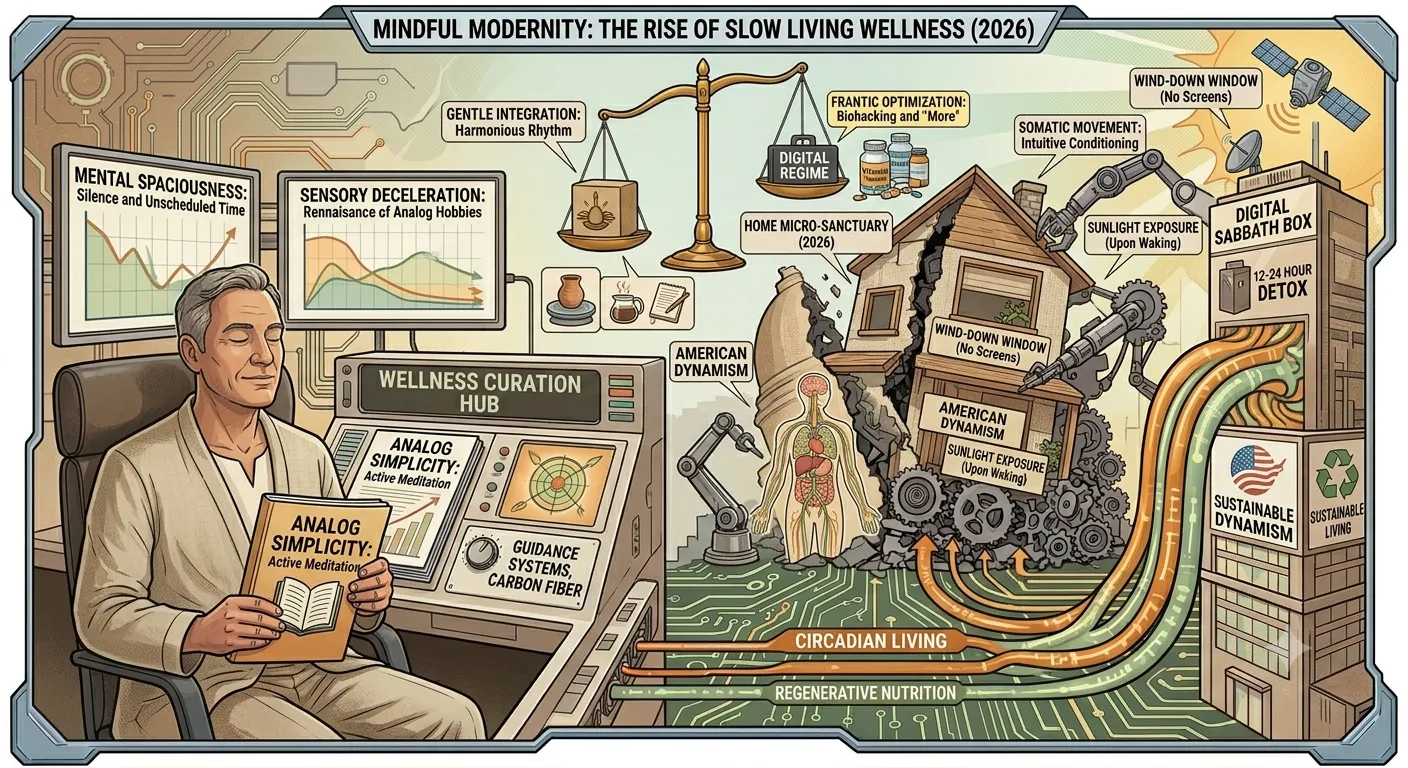
As we navigate the evolving landscape of 2026, the concept of wellness has undergone a quiet yet profound revolution, moving away from frantic, optimization-obsessed biohacking toward a philosophy of gentle integration. This year, the global consciousness has collectively paused, steering away from the relentless pursuit of “more” to embrace the elegant restraint of “Slow Living.” True luxury is no longer defined by how much we can fit into our schedules, but by how mindfully we can curate our days. In this new era of mindful modernity, wellness is less about rigid routines and more about creating a harmonious, sustainable rhythm that respects both our personal boundaries and the natural world.
At the heart of this cultural shift lies a desire to reclaim our attention from the hyper-interactive digital realm and anchor it firmly in the physical present. We are witnessing a collective realization that constant connectivity comes at a steep cognitive and emotional cost. Consequently, the trendsetters of 2026 are prioritizing mental spaciousness, viewing silence, unscheduled time, and analog simplicity not as indulgences, but as essential pillars of a refined lifestyle. This movement invites us to redesign our daily lives with intention, ensuring that every object we own, every meal we consume, and every habit we cultivate serves a deeper purpose.
The first major trend defining this year is the widespread adoption of circadian living, a practice that encourages us to align our daily biological clocks with the natural cycles of light and dark. For years, artificial blue light and irregular sleep schedules have disrupted our natural circadian rhythms, leading to chronic fatigue and modern malaise. In 2026, we are witnessing a return to chronobiology—the science of scheduling our sleep, exercise, and meals in harmony with our internal biological clocks. By respecting these natural fluctuations, we can unlock sustained energy levels and a deeper sense of vitality without relying on artificial stimulants.
To integrate circadian living into your daily routine, start by exposing your eyes to natural sunlight within thirty minutes of waking, which helps signal to your brain that the day has begun. Conversely, as evening approaches, transition your home environment into a low-light sanctuary by dimming overhead fixtures and utilizing warm, amber-toned lighting. This simple shift encourages the natural production of melatonin, preparing your body for a night of genuinely restorative sleep. Additionally, establishing a consistent wind-down window free from screens allows the nervous system to transition smoothly from daytime alertness to nighttime tranquility.
In parallel with our biological alignment, 2026 has sparked a renaissance in analog hobbies and sensory deceleration. As our professional lives become increasingly automated and virtual, we are experiencing a deep sensory hunger that digital screens simply cannot satisfy. Tactile, screen-free activities such as pottery, slow-pour coffee brewing, physical journal writing, and gardening have emerged as the ultimate forms of active meditation. These practices demand our full physical presence, requiring us to slow down, focus on the coordination of our hands, and appreciate the subtle textures, scents, and sounds of the physical world.
Practically speaking, creating boundaries around our digital consumption is essential to making space for these analog pursuits. A highly effective strategy for 2026 is the implementation of a weekly “digital Sabbath”—a designated twelve-to-twenty-four-hour block during the weekend where smartphones and tablets are put away entirely. During this time, allow yourself to engage in activities that do not yield a digital output or require an internet connection. Whether you spend the afternoon reading a physical book, preparing a complex recipe from scratch, or walking in nature, you will find that your mind returns to a state of calm focus that digital spaces often disrupt.
Our approach to nourishment has also evolved, shifting focus toward regenerative nutrition and earth-centric dining. The modern consumer is no longer satisfied with superficial superfoods or restrictive diets; instead, the emphasis has shifted to how our food is grown and its impact on the planet’s soil. Regenerative agriculture, which focuses on restoring soil health and biodiversity, has become the benchmark for conscious eating. By choosing foods that are grown using these sustainable methods, we are not only consuming ingredients that are more nutrient-dense, but we are also actively participating in the healing of our ecosystems.
Cultivating this regenerative approach to dining in your own kitchen involves a shift toward seasonal minimalism and hyper-local sourcing. Dedicate a portion of your weekly routine to visiting local farmers’ markets, where you can source ingredients that are native to your region and naturally in season. Preparing meals then becomes an act of mindful artistry, where a few high-quality, whole ingredients are elevated through simple, traditional cooking techniques. Slowing down to prepare and savor these meals converts eating from a mindless chore into a daily ritual of gratitude and deep nourishment.
Physical fitness in 2026 has similarly moved away from punishing, high-intensity workouts that deplete the body, shifting instead toward somatic movement and intuitive conditioning. The prevailing wisdom of the year recognizes that chronic stress cannot be solved by pushing the body to its physical limits in the gym. Somatic movement focuses on internal physical sensation rather than external performance, encouraging individuals to move in ways that release stored tension and promote joint mobility. This gentle, mindful approach to physical activity fosters a compassionate relationship with our bodies, preventing burnout and promoting long-term longevity.
Incorporating somatic practices into your lifestyle does not require hours of dedicated training, but rather a shift in awareness during your existing movement routines. Begin by incorporating gentle stretching, intuitive yoga flows, or slow, deliberate walks into your daily schedule, paying close attention to how your muscles and joints feel rather than how many calories you are burning. Taking short, five-minute breaks throughout the workday to perform gentle neck rolls, shoulder shrugs, and deep diaphragmatic breathing can prevent the physical accumulation of stress, keeping your body fluid and your mind clear.
Ultimately, our physical environments must reflect this inner pursuit of tranquility, giving rise to the trend of home micro-sanctuaries. In 2026, the home is no longer just a functional living space or a remote office; it is a sacred retreat designed to shield us from the noise of the outside world. This has led to a rise in sustainable minimalism, where spaces are curated with natural materials like untreated wood, stone, linen, and clay. By decluttering our living areas and dedicating specific corners of our homes to silence and contemplation, we create a supportive physical foundation for our mental well-being.
Embracing these shifts in 2026 is ultimately an invitation to step off the treadmill of constant acceleration and return to a more authentic, grounded way of being. By aligning our habits with the natural rhythms of our bodies and the earth, we discover that a refined life is not one filled with endless acquisitions, but one rich in presence and peace. As you integrate these mindful practices into your daily existence, you will find that the quiet moments of life hold the greatest potential for transformation, allowing you to move through the modern world with grace, resilience, and an enduring sense of purpose.