
The Intersection of Policy and Pragmatism: Analyzing the Challenges of Forced Homelessness Treatment in Utah
The national discourse surrounding homelessness is undergoing a significant ideological shift, moving away from voluntary social service models toward more interventionist, state-led strategies. This transition is highlighted by recent proposals to implement forced treatment and the relocation of unhoused populations to centralized campuses. As urban centers struggle with the complexities of mental health crises and encampments, the political appetite for mandatory solutions has grown, influenced heavily by high-profile endorsements of institutionalization. However, as demonstrated by recent legislative developments in Utah, the transition from political rhetoric to actionable policy faces substantial logistical, financial, and legal hurdles that complicate the vision of a unified national strategy.
Former President Donald Trump has been a vocal proponent of this shift, advocating for the removal of homeless populations from city streets and their relocation to designated “tent cities” or large-scale campuses. This approach prioritizes public order and the reclamation of urban spaces, under the assumption that centralized campuses can more efficiently provide psychiatric care and substance abuse treatment. The rhetoric suggests that by concentrating services and mandates, the state can address the root causes of homelessness more effectively than through decentralized, “Housing First” initiatives. This top-down model seeks to bypass the perceived slow pace of traditional outreach in favor of immediate, large-scale intervention.
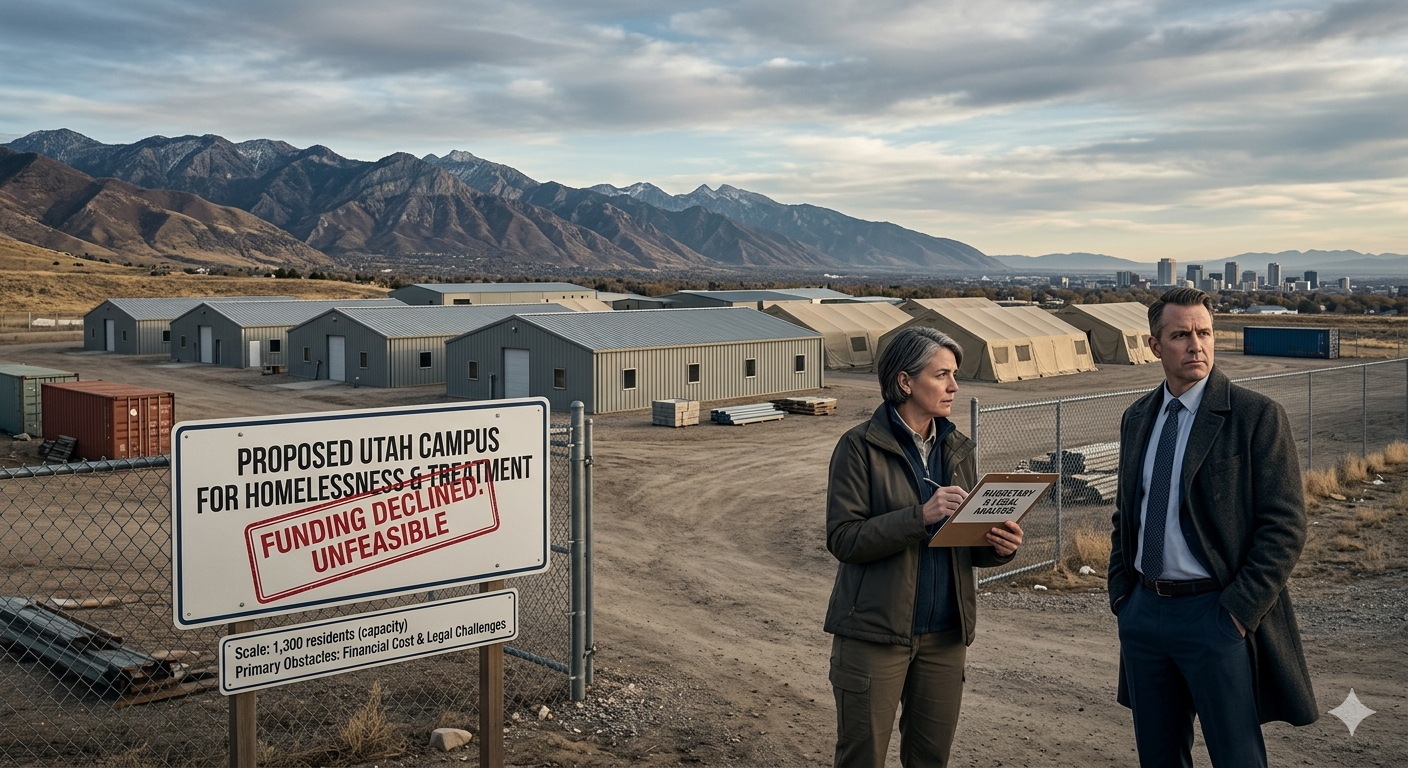
Utah recently became a primary testing ground for this ideology when a proposal emerged to create a massive campus on the outskirts of Salt Lake City. The plan aimed to house and treat approximately 1,300 individuals in a singular, controlled environment, reflecting the spirit of the campus-based models advocated at the national level. Proponents argued that this scale was necessary to address the burgeoning crisis in the state’s capital, where existing shelters were consistently at capacity. By moving the population to the city’s edge, advocates hoped to alleviate the strain on downtown businesses and public resources while providing a structured path to rehabilitation for those in need.
Despite the initial momentum behind the proposal, Utah state lawmakers ultimately declined to provide the necessary backing and funding for the project. This resistance was not necessarily a rejection of the underlying goal of reducing homelessness, but rather a response to the immense practical challenges inherent in the plan. Lawmakers cited concerns over the sheer cost of constructing and maintaining such a facility, which would require significant long-term fiscal commitments. Additionally, the legislative body expressed skepticism regarding the efficacy of congregate care on such a large scale, noting that similar historic attempts at institutionalization often led to poor outcomes for the individuals involved.
A primary cause of the plan’s failure was the projected economic burden. Building a self-sustaining campus capable of providing medical care, security, and housing for over a thousand people requires an infrastructure investment that many states find prohibitive. Unlike the incremental costs associated with smaller, community-based housing units, the campus model demands an upfront capital infusion and high operational overhead. In Utah’s case, the fiscal conservatism of the legislature clashed with the ambitious financial requirements of the project, leading to a stalemate that effectively halted the proposal’s progress during the most recent legislative session.
Legal and ethical considerations also played a pivotal role in the legislative pushback. The concept of “forced treatment” occupies a precarious legal space in the United States, governed by strict due process requirements and civil liberty protections. Implementing a system where individuals are mandated to live in a specific campus and undergo treatment requires a robust legal framework that currently does not exist in most states. Lawmakers were wary of the potential for lawsuits and the high bar set by the Supreme Court regarding the involuntary commitment of non-dangerous individuals. Without a clear legal pathway to mandate residency, the campus threatened to become a voluntary facility that might not achieve its intended occupancy or social goals.
The geographical isolation of the proposed Utah campus further complicated its viability. By placing the facility on the “edge” of the city, planners inadvertently created barriers to reintegration. Research in urban planning and social work suggests that isolating marginalized populations away from job markets, public transportation, and existing community networks often results in lower rates of long-term success. Legislators and advocates for the unhoused argued that moving 1,300 people to a peripheral site would effectively create a “warehouse” for the poor, rather than a bridge to stable, independent living, thereby perpetuating the cycle of poverty it sought to break.
Furthermore, the debate in Utah reflects a broader national conflict between the “Housing First” philosophy and the “Treatment First” or campus-based approach. For years, the federal government and many states have prioritized providing permanent housing as a baseline, under the theory that stability is a prerequisite for successful medical treatment. The Trump-inspired campus model reverses this logic, suggesting that treatment and sobriety must be addressed in a controlled environment before housing is granted. The rejection of the Salt Lake City plan indicates that while there is public frustration with the “Housing First” model’s slow results, lawmakers remain unconvinced that return to institutionalized treatment is a fiscally or socially superior alternative.
< shopping the political landscape, it is evident that while the specific 1,300-person campus was rejected, the “spirit” of the plan remains influential. Supporters continue to push for smaller versions of the campus model or for expanded powers to mandate treatment for those suffering from severe mental illness. This suggests that the failure of the initial proposal was more a matter of scale and logistics than a wholesale rejection of the interventionist philosophy. The legislative process in Utah highlights a burgeoning trend where local governments are caught between the demand for immediate public order and the reality of limited resources and complex human rights obligations.
The implications of the Utah experience extend beyond state lines, serving as a cautionary tale for other jurisdictions considering similar large-scale mandates. It underscores that even when there is significant political alignment with national trends—such as the move toward tougher homelessness policies—the localized reality of implementation can be a insurmountable barrier. The failure to secure funding suggests that without a clear, cost-effective strategy that addresses legal liabilities, even high-profile political backing is insufficient to override the practical concerns of state-level budgeting and civil law.
As the 2024 election cycle approaches, the debate over forced treatment and the relocation of the homeless is likely to intensify. Political leaders will continue to use the visibility of the homelessness crisis to advocate for radical shifts in policy. However, the Utah case study proves that the path from a campaign-style proposal to a functioning state program is fraught with difficulty. Future policies will likely need to find a middle ground that incorporates elements of increased oversight and mandatory care without the massive fiscal and legal risks associated with large, isolated campuses.
In conclusion, the tension between the desire for “clean streets” and the necessity of sustainable social policy remains one of the most difficult challenges for modern American governance. Utah’s struggle with the campus model demonstrates that while the rhetoric of forced treatment may resonate with a frustrated public, the actualization of such plans requires more than just political will. It requires a massive realignment of legal frameworks and financial priorities that many states are currently unwilling or unable to provide. The evolution of this policy will depend on whether proponents can refine the campus model to be more legally defensible and fiscally manageable in the years to come.