
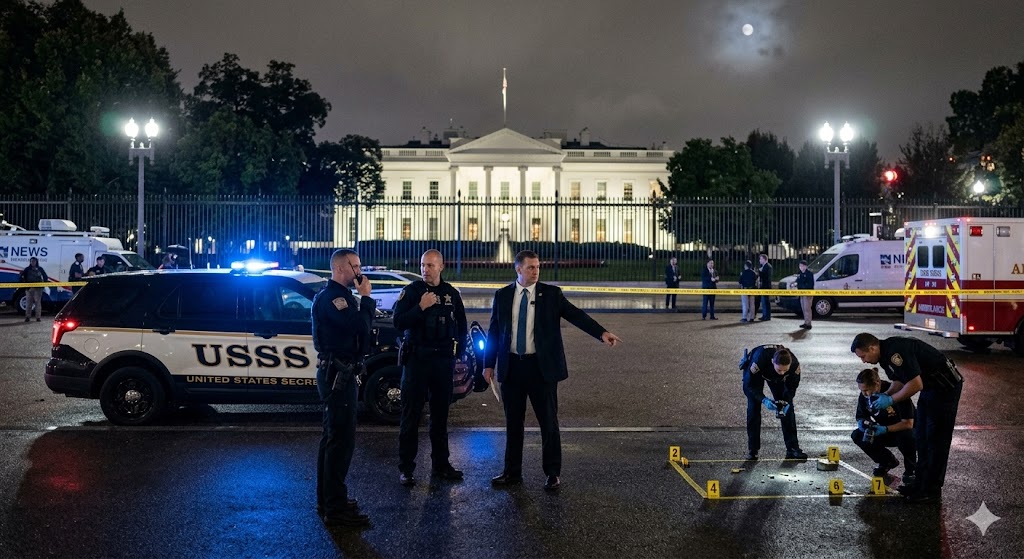
The high-profile security incident that forced an abrupt halt to a White House press briefing continues to raise questions as investigators delve into the specifics of the exchange. Law enforcement officials have confirmed that a Secret Service officer sustained a gunshot wound during a confrontation just outside the executive mansion’s perimeter. While the event initially caused significant alarm, the focus of the investigation has shifted toward the precise sequence of events that led to the discharge of firearms and the subsequent injury of a federal agent.
According to official reports, the encounter began when a 51-year-old male suspect approached an officer at a guard post and claimed to possess a weapon. The individual then reportedly assumed a tactical stance and appeared to draw an object from his clothing, prompting the officer to respond with lethal force. The suspect was transported to a local hospital in critical condition, while the wounded officer was treated for injuries that were described as non-life-threatening.
Legal scrutiny has intensified following the release of court documents that provide a nuanced view of the charges against the suspect. Interestingly, the initial court filings do not explicitly accuse the individual of firing a weapon at the officer. This omission has led to public speculation regarding the source of the projectile that struck the agent, creating a gap between the physical evidence presented and the narrative of a direct gunfight.
Despite the absence of a direct shooting charge in the preliminary papers, senior law enforcement officials have been quick to clarify the nature of the officer’s injury. Authorities have formally stated that the incident was not a case of friendly fire, a term used to describe accidental shootings by fellow law enforcement personnel. This assertion suggests that investigators believe the injury was a direct result of the suspect’s hostile actions, even if the formal legal language has yet to catch up to the investigative findings.
Evidence recovery efforts at the scene have been comprehensive, though the details regarding the suspect’s weapon remain under tight control by federal agencies. The incident has prompted a review of security protocols at the White House gates, emphasizing the volatility of solo-actor threats in high-security zones. The suspect now faces multiple federal charges related to the assault of a law enforcement officer, with additional counts possible as the forensic analysis of the ballistic evidence is finalized.
As the legal process moves forward, the discrepancy between the court documents and official statements remains a focal point for defense attorneys and legal analysts. The resolution of this case will likely depend on body camera footage and forensic ballistics to determine the exact mechanics of the shooting. For now, the administration has praised the quick response of the Secret Service, maintaining that their actions prevented a more significant security breach during a vulnerable moment for the executive branch.