
The Legal and Economic Implications of Potential Renewed Oversight into Federal Reserve Leadership
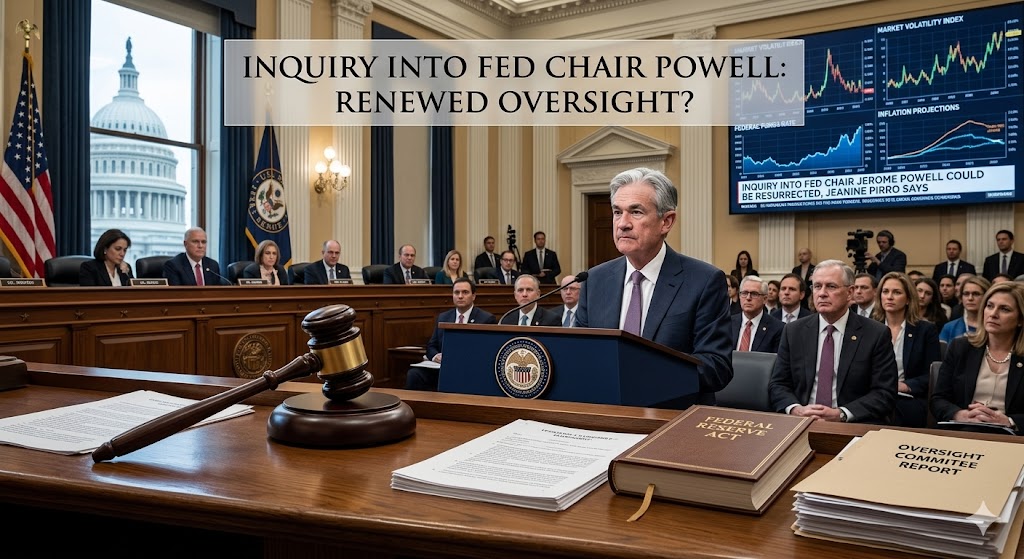
The recent announcement by the U.S. Attorney’s office in Washington regarding the potential resurrection of an inquiry into Federal Reserve Chair Jerome Powell has sent ripples through both the legal community and global financial markets. This development follows a significant procedural setback last month when a federal judge intervened to block grand jury subpoenas, effectively stalling the initial investigation. The decision to revisit the case suggests that prosecutors believe they have identified new legal pathways or evidentiary grounds that could bypass previous judicial hurdles. By signaling that the inquiry is not permanently closed, the U.S. Attorney’s office is asserting its role in maintaining oversight over high-ranking officials, even within theoretically independent institutions.
The core of the legal stalemate lies in the judiciary’s role as a gatekeeper for grand jury proceedings. When the federal judge blocked the initial subpoenas, the ruling was seen as a protective measure for the institutional integrity of the Federal Reserve. The court’s primary concern often revolves around whether an investigation into the Fed Chair constitutes an overreach of executive power or a violation of the specialized protections afforded to the central bank to ensure it remains insulated from political pressure. Consequently, the temporary cessation of the inquiry was viewed as a victory for those advocating for central bank independence, though the prospect of its “resurrection” suggests this relief may have been premature.
From an analytical perspective, the cause-and-effect relationship between legal scrutiny and economic stability cannot be overstated. Jerome Powell occupies perhaps the most influential position in the global economy; thus, any cloud of legal uncertainty surrounding his leadership directly impacts investor sentiment. When the subpoenas were first blocked, market volatility showed signs of tempering as the threat of institutional decapitation receded. However, the move to re-examine the case introduces a fresh layer of risk premium into the markets, as investors must now account for the possibility of a leadership transition or a distracted Federal Open Market Committee during a critical period of inflation management.
The specific nature of the inquiry remains a subject of intense professional debate, focusing on the boundaries of transparency and administrative conduct. Prosecutors are likely examining whether specific actions or communications within the Federal Reserve crossed the threshold of regulatory violations or ethical breaches. Because the Federal Reserve operates with a high degree of autonomy, the legal standard for proving misconduct is exceptionally high. Jeanine Pirro’s assertion that the inquiry could be resurrected implies that the U.S. Attorney’s office may be refining its strategy to focus on narrower, more targeted aspects of Powell’s tenure that might more easily clear the evidentiary bar set by the district court.
A renewed investigation would also test the structural limits of the separation of powers. The Federal Reserve is an independent agency within the executive branch, but it is accountable to Congress, not directly to the U.S. Attorney’s office for its policy decisions. If the resurrected inquiry is perceived as a challenge to policy-making rather than a probe into specific legal infractions, it could trigger a protracted constitutional conflict. This tension serves as a catalyst for a broader debate on how much oversight the legal system should have over technocratic institutions that are designed to prioritize long-term economic health over short-term legal or political cycles.
The potential for a resurrected inquiry also carries significant implications for the internal operations of the Federal Reserve itself. Historically, leadership continuity is a hallmark of the central bank’s credibility. If the head of the institution is embroiled in a persistent legal battle, it can lead to internal friction and a potential shift in the consensus-driven model of the Federal Open Market Committee. The psychological impact on staff and the potential for a “brain drain” of key advisors who may fear legal exposure or institutional instability are secondary effects that could weaken the Fed’s efficacy in the long run.
Furthermore, the judicial criteria for reopening such an inquiry will likely involve a rigorous assessment of “new and material” evidence. Under federal law, a prosecutor cannot simply refile the same subpoenas without addressing the specific deficiencies identified by the judge in the previous round. This means the U.S. Attorney’s office must present a compelling case that circumstances have changed or that prior omissions have been corrected. The success of this effort will depend on the strength of the legal theory behind the probe and whether it can survive the inevitable motions to dismiss from Powell’s legal counsel.
Public trust in the impartiality of the justice system is another critical variable in this developing narrative. The decision to pursue an inquiry into a figure as prominent as Powell is often scrutinized for signs of political motivation. By framing the potential return of the investigation through professional legal channels, the U.S. Attorney’s office is attempting to maintain an objective stance. However, the intersection of high finance and high-level law enforcement rarely avoids the specter of political interpretation, which can further polarize public opinion regarding both the Federal Reserve and the Department of Justice.
Looking ahead, the timeline for any such resurrection will be crucial. If the U.S. Attorney’s office moves forward during a period of economic fragility, the backlash from the financial sector could be substantial. Conversely, if the inquiry is delayed, it may lose momentum or be viewed as a historical footnote rather than an active pursuit of justice. The strategic timing of these legal maneuvers often dictates their ultimate success, as the political and economic landscape provides the context in which judges and grand juries make their final determinations.
The intersection of administrative law and central banking is a complex field, and this case represents a landmark moment in that history. The initial blockage of the subpoenas established a precedent that protects the Fed Chair from standard grand jury probes unless a high threshold of probable cause is met. If the U.S. Attorney is successful in resurrecting the inquiry, it will signify a shift in the legal standards governing the accountability of independent agency heads. This would essentially redefine the relationship between law enforcement and the administrative state, potentially making high-level officials more susceptible to judicial review than previously thought.
Ultimately, the saga involving the inquiry into Jerome Powell underscores the fragile balance between accountability and independence. While no individual is above the law, the mechanisms used to enforce that law must be carefully calibrated to avoid destabilizing the very institutions that maintain national economic order. The decision to potentially reopen the case ensures that the debate over Powell’s leadership and the scope of federal oversight will remain a central theme in the American legal and economic discourse for the foreseeable future.
In conclusion, the prospect of a renewed inquiry serves as a reminder of the inherent tensions within the U.S. government’s structure. As legal professionals and market analysts watch the U.S. Attorney’s next moves, the focus will remain on whether the proposed resurrection of the probe is based on substantive new findings or a persistent effort to test the limits of judicial intervention. Regardless of the outcome, the process itself has already altered the perceived invulnerability of the Federal Reserve’s leadership, marking a new chapter in the history of institutional oversight in the United States.